Why Propeller Balancing Is Essential for Your Boat’s Performance
Think about your boat as a finely tuned machine where everything needs to sing together. When one part — the propeller — is off-key, the whole experience changes. Propeller balancing isn’t a niche luxury; it’s essential maintenance that affects speed, fuel economy, comfort, and the health of your drivetrain. If you care about getting where you’re going smoothly and efficiently, propeller balancing should be on your maintenance checklist.
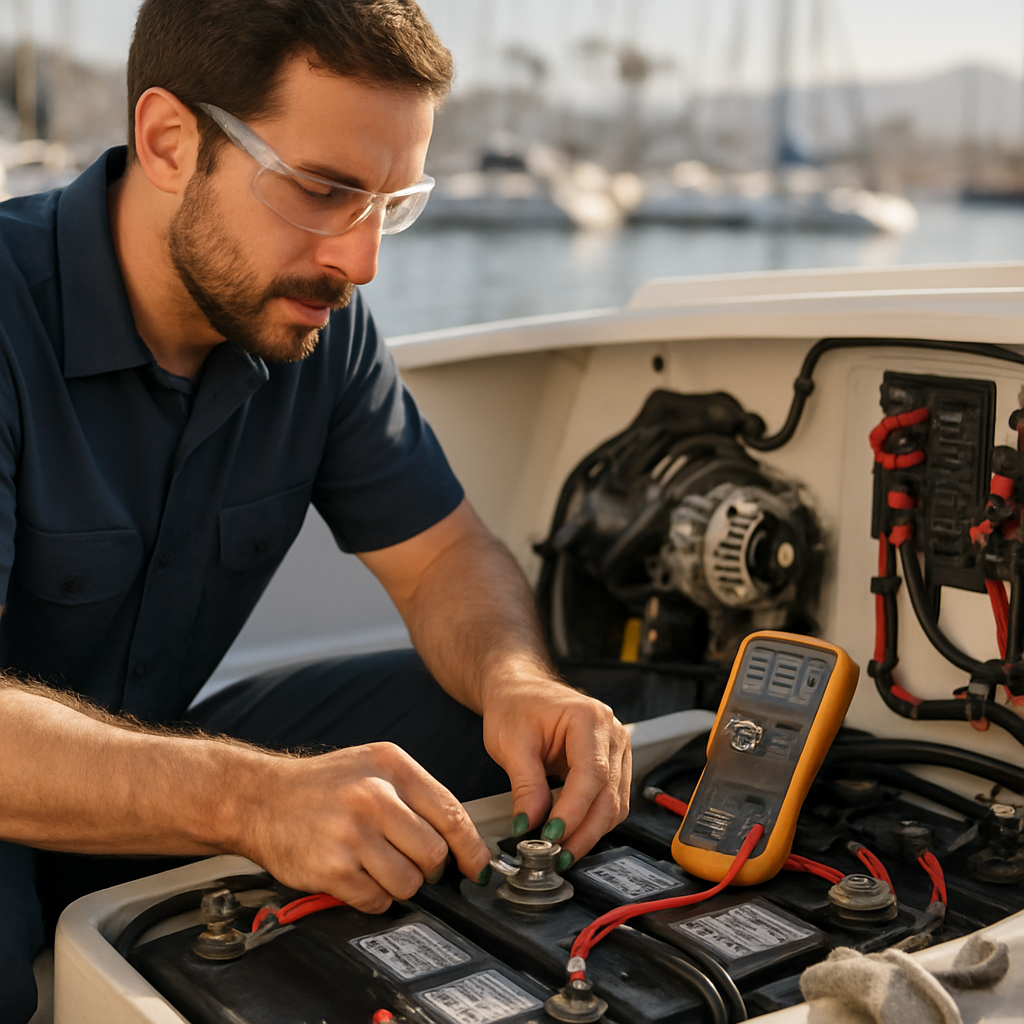
Vibration from an imbalanced propeller travels through the shaft, engine mounts, and hull. Over time, that vibration accelerates wear on bearings, couplings, transmission seals, and even the hull structure itself. For boaters in California — whether you’re cruising the Bay, working the harbors of Southern California, or trolling off the coast — the combination of long runs and saltwater exposure can magnify small issues into expensive problems. Regular propeller balancing keeps thrust steady, reduces cavitation, and improves acceleration, top speed, and fuel consumption. It also makes time on the water more enjoyable: less noise, less fatigue, and fewer headaches when you return to port.
Sometimes vibration isn’t just about the blades—shaft and drivetrain problems are often involved. If you want to understand straightening, bearings and coupling issues in more detail, see our Drive Shaft Alignment page for guidance and signs to watch for. For a broader overview of propulsion systems and maintenance best practices that tie directly into propeller balancing, check our Drivetrain and Propellers resource. And if you notice leaks or water at the stern, read about Shaft Seal Replacement to prevent further drivetrain damage.
Common Causes of Propeller Imbalance and How Boatmechanic California Fixes Them
There’s rarely a single reason a propellent gets out of balance. Usually, it’s a mix of wear, impact, and environmental factors. Knowing the cause guides the fix — and Boatmechanic California follows a methodical approach to diagnose and repair.
Common causes of propeller imbalance
- Strike damage: hitting rocks, logs, or debris bends a blade or removes chunks, shifting weight distribution instantly.
- Corrosion and erosion: saltwater and cavitation eat away metal gradually, altering blade mass and profile.
- Hub deterioration: rubber or elastomer hubs degrade over time, causing slippage or uneven engagement with the shaft.
- Marine growth: barnacles, weed, and paint buildup add uneven weight to blades.
- Manufacturing or repair defects: poorly executed welds, uneven machining, or prior bad repairs can introduce imbalance.
- Drivetrain issues: bent shafts, worn cutlass bearings, or loose engine mounts can mimic propeller imbalance or worsen vibration.
How Boatmechanic California diagnoses and fixes these causes
Boatmechanic California uses a step-by-step inspection and repair process so you don’t waste money on the wrong solution:
- Detailed history and symptom intake — when did the vibration start, in which RPM ranges, any recent strikes?
- Visual and tactile inspection on the shaft — look for nicks, dents, hub separation, and runout.
- Thorough cleaning — removing marine growth and old paint to reveal the true condition of blades.
- Non-destructive testing when needed — dye penetrant checks for hairline cracks on high-stress blades.
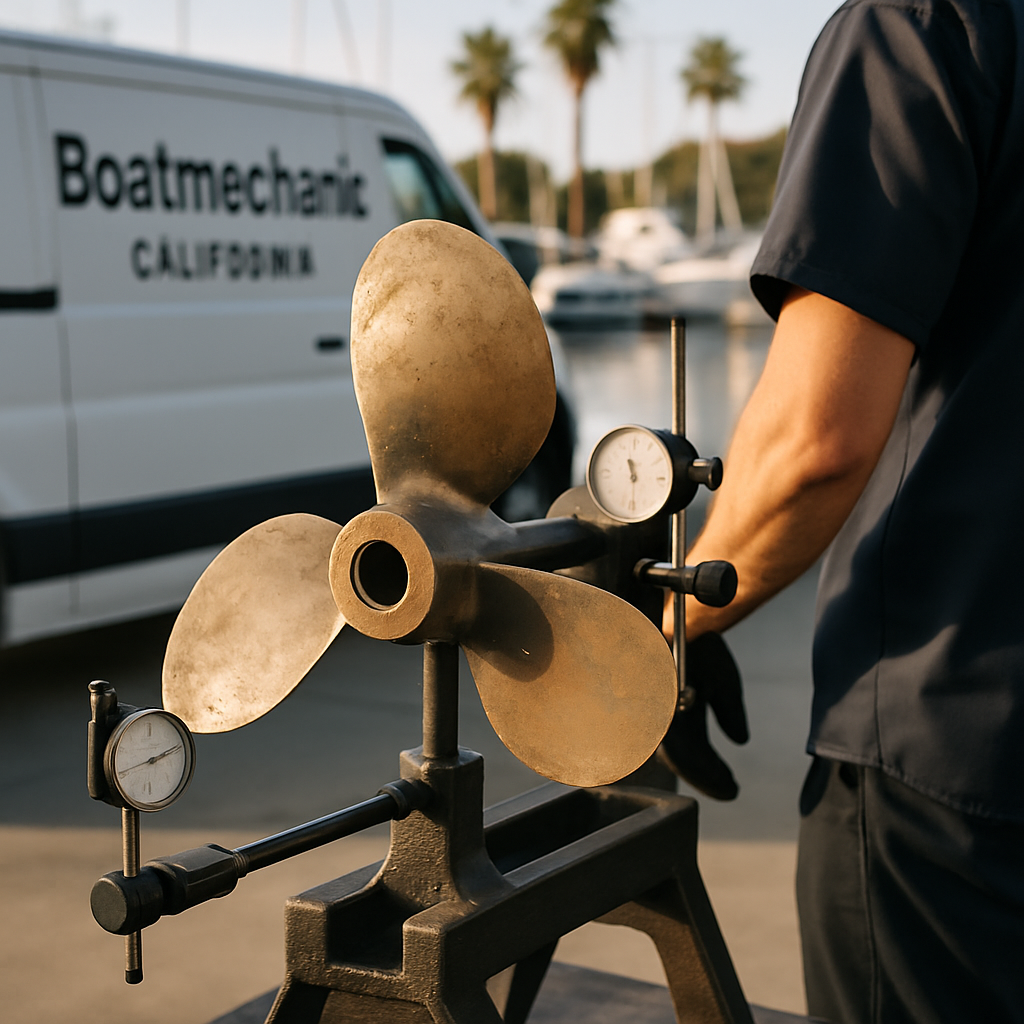
- Static and dynamic balancing — using bench balancing for small imbalances and computerized dynamic balancing for high-speed propellers.
- Precision repair — grinding, welding, or adding calibrated weights performed by experienced technicians to restore balance without weakening blades.
- Hub repairs or replacement — swapping out deteriorated hubs or re-bushing to maintain secure shaft engagement.
- Addressing root causes — straightening shafts, replacing worn bearings, or correcting alignment so the balancing result lasts.
It’s about more than just the prop. Fixing the obvious without addressing what’s causing it is like putting a bandage on a leaky pipe. Boatmechanic California aims to fix both the symptom and the root cause so you can get back on the water with confidence.
How Boatmechanic California Performs Propeller Balancing Safely and Efficiently
Balancing a propeller well is a blend of art, science, and careful safety practice. Here’s the practical roadmap Boatmechanic California follows to make sure the job’s done right and your downtime is minimized.
Step-by-step balancing workflow
- Pre-service assessment: Collect symptom details and previous service history. Knowing when the issue started helps pinpoint causes faster.
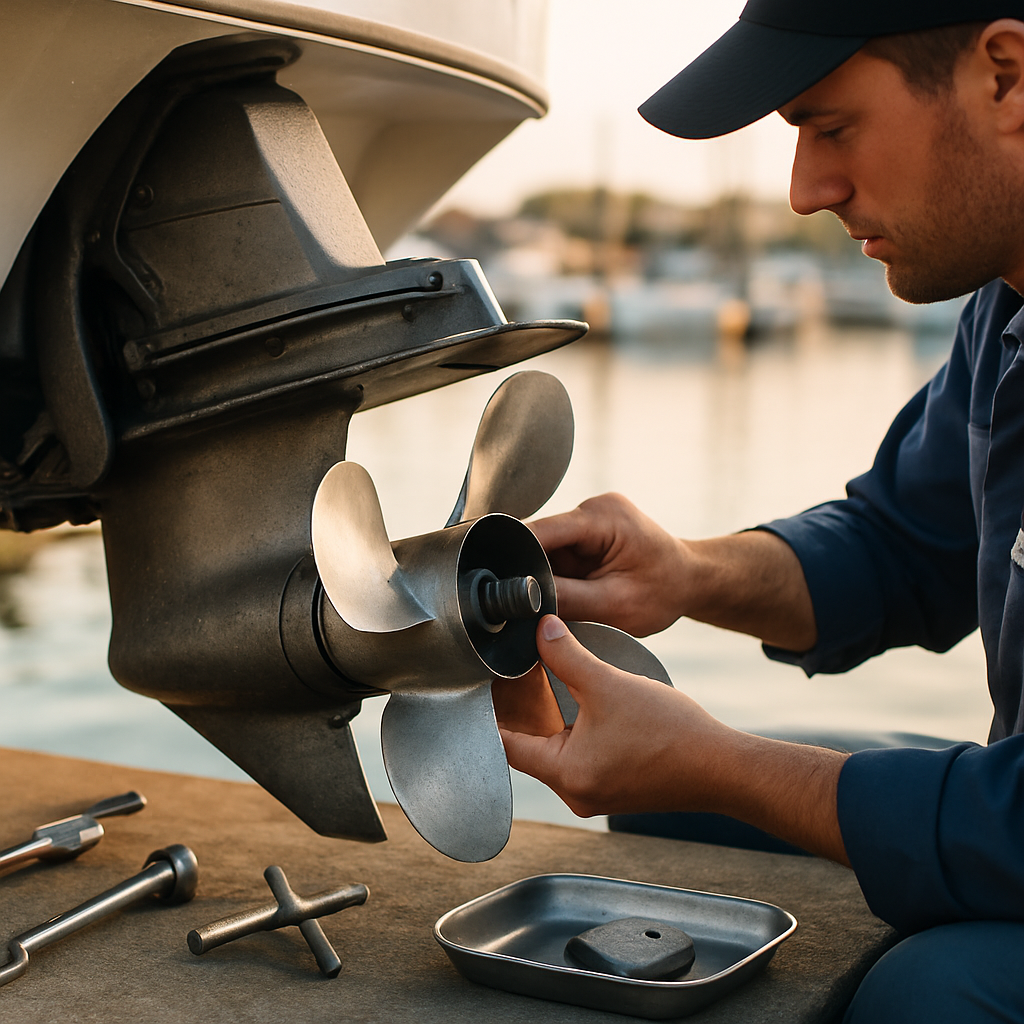
- Safe removal: Props are removed following OEM torque specs and documented so reassembly is precise.
- Inspection: Blades and hub inspected for structural faults using magnification or dye checks when necessary.
- Clean and measure: All paint and fouling removed, then measurements taken for mass distribution and runout.
- Balancing: Static bench balancing for single-plane issues; computerized dynamic balancing for multi-blade and high-speed props—especially important for commercial or large recreational craft.
- Material correction: Careful grinding, welding, or adding weights to restore balance to factory tolerances without reducing blade strength.
- Reassembly and verification: Reinstall with correct shaft alignment and torque, then perform a sea trial across RPM ranges to verify vibration reduction.
- Documentation and warranty: Provide before-and-after vibration readings and a written report with a warranty on workmanship.
Boatmechanic California also offers mobile balancing units that let them work at marinas or slips. That means less hassle hauling your boat out and less time off the water. Technicians follow ABYC-aligned safety protocols, use PPE, and bring calibrated tools to every job, ensuring consistent, safe, and verifiable results.
Warning Signs That Your Propeller Needs Balancing
How do you know it’s time to call a pro? Some signs are obvious, others are subtle. Notice one or more of these, and don’t ignore them — the sooner you act, the easier (and cheaper) the fix usually is.
Signs to watch for
- Vibration or shaking felt at the helm, cockpit, or engine compartment at specific RPM ranges.
- Reduced top speed or sluggish acceleration though the engine runs normally.
- Higher-than-usual fuel consumption for the same cruising speed.
- Unusual noises from the stern — clanking, knocking, or a humming change.
- Steering twitch or rudder movement when throttling up or down.
- Visible blade damage: bent tips, nicks, missing chunks, or wobble when you spin the prop on the shaft.
Proactively checking the prop after trailering, hitting shallow water, or hard objects can save you a lot of trouble. If you spot damage, schedule an inspection — often a balancing and small repair will get you back to normal. Letting it ride? That vibration will happily destroy bearings and mounts in the background, and you’ll be sorry when the repair bill arrives.
Propeller Balancing vs. Propeller Replacement: When to Choose
Balancing is usually the first and most cost-effective step. But sometimes replacement is the better choice. Here’s how to decide, and how Boatmechanic California guides boat owners through the tradeoffs.
When propeller balancing is the right call
- Minor nicks and small dents that haven’t altered structural integrity.
- Hub wear is minimal and the prop locks securely to the shaft.
- Vibration is caused by uneven mass distribution rather than shaft or gearbox problems.
- You want a fast, lower-cost fix that restores performance.
When replacement is recommended
- Major bending or missing chunks that affect lift and structural strength.
- Cracks or fractures where welding would further weaken the blade.
- Severe hub failure or persistent vibration after multiple repairs.
- Your propeller’s pitch or design no longer suits your boat’s performance needs — upgrading may yield better fuel economy or handling.
Boatmechanic California doesn’t push replacement when balancing will do. You’ll get a clear, documented recommendation: balance, repair, or replace, with estimated costs, expected gains, and downtime. That transparency helps you choose what’s best for your budget and boat use.
Choosing a Qualified Propeller Balancing Service in California
Not every prop shop offers the same expertise. Picking the wrong provider can leave you right back where you started — or worse. Here’s what to look for when choosing a propeller balancing service, especially in California’s diverse boating scene.
Key criteria when selecting a service
- Experience with your vessel type: Different boats — center consoles, sportfishers, ferries, workboats — have unique propulsion demands. Make sure they’ve worked on boats like yours.
- Proper equipment: Computerized dynamic balancing and calibrated static benches matter. In-water dynamic balancing capability is a big plus for marina service calls.
- Thorough diagnostics: Reputable shops check shaft straightness, cutlass bearings, and engine mounts, not just the prop.
- Certifications and standards: ABYC alignment or equivalent industry awareness shows they follow best practices.
- Transparent pricing and documentation: Written estimates, before-and-after vibration readings, and clear warranties protect you.
- Mobile service options: If they can balance on-site at marinas, that saves you hauling fees and downtime.
- Warranty and follow-up: A confident shop will stand behind their work and handle follow-ups if vibration reappears.
Boatmechanic California fits these criteria: experienced technicians, mobile units for in-water balancing at California marinas, shop-based dynamic balancing for tougher jobs, and a track record serving both recreational and commercial operators. They provide documented before-and-after vibration reports so you can actually see the improvement.
Practical Maintenance Tips to Prevent Propeller Imbalance
Prevention is cheaper than cure. Spend a little time on routine care and you’ll avoid many headaches.
- Inspect after every trailered trip and especially after any grounding or suspected strike. A tiny nick left alone can grow into a big imbalance.
- Keep props clean — remove barnacles, weed, and paint build-up seasonally.
- Use sacrificial anodes and proper anti-fouling systems to minimize corrosion on blades and hub.
- Monitor gearbox and engine mounts — worn mounts cause vibration that masks as prop issues.
- Check shaft alignment and cutlass bearings during haul-outs as part of scheduled maintenance.
- Record symptoms — when the vibration happens (RPMs, load, gear). That intel helps technicians diagnose faster.
Quick Comparison: Balancing vs Replacement
| Aspect | Balancing | Replacement |
|---|---|---|
| Initial cost | Lower | Higher |
| Downtime | Short | Longer (ordering/fitment) |
| Effectiveness | High if structure intact | Necessary for major damage |
| Long-term outcome | Good when drivetrain issues fixed | Best for critically damaged props |
Frequently Asked Questions
How often should I have my propeller inspected?
At minimum, inspect visually after every trailered trip and have a professional inspection annually. If you notice vibration or a change in performance, schedule a check immediately — early detection usually means a simpler, cheaper repair.
Can an imbalanced propeller damage my engine?
Yes. Persistent vibration damages bearings, seals, shaft couplings, and mounts. That small vibration you feel today can turn into a hefty repair bill if ignored.
Is in-water balancing effective?
In-water dynamic balancing can be very effective, particularly when you want to avoid a haul-out. It works best when shaft alignment, cutlass bearings, and mounts are in good condition — otherwise the balancing result may not hold.
How long does propeller balancing last?
When done correctly and when root causes are addressed, balancing can last years. However, new impacts, significant corrosion, or hub deterioration will require additional attention. Regular checks help maintain the result.
Final Thoughts and Next Steps
Propeller balancing is one of the smartest investments you can make in your boat’s performance and longevity. It’s inexpensive relative to major drivetrain repairs, can improve fuel economy and comfort, and restores confidence on the water. If you’re cruising along the California coast or working a busy harbor, balanced props mean fewer surprises and a smoother ride home.
If you suspect vibration, have noticed decreased speed or higher fuel consumption, or simply want a yearly check to stay ahead of issues, reach out to a qualified service. Boatmechanic California offers experienced technicians, mobile marina service, and shop-based dynamic balancing — complete with documentation and a workmanship warranty. Schedule an inspection, get clear recommendations, and get back to enjoying time on the water without the rattles and shakes.