Bilge Pump Testing: Keep Your Boat Dry, Safe, and Sea-Ready — A Practical Guide You Can Use Today
Introduction: Why Bilge Pump Testing Matters
You love being out on the water — the breeze, the sun, the freedom. But nothing ruins a day faster than finding water pooling in the bilge or, worse, a pump that doesn’t kick in when you need it. That’s why Bilge Pump Testing should be part of your routine. It’s not glamorous, but it’s one of the most effective ways to protect your boat, your crew, and your wallet. In California, with its salt air, marine growth and busy waterways, a dependable bilge pump is not optional — it’s essential.
This guest post walks you through best practices, how professionals like Boatmechanic California perform tests, a step-by-step testing guide you can try yourself, common problems and fixes, commercial considerations, and the tools you’ll want in your kit. Read on — and bring a cup of coffee. We’ll make this practical, human, and a little bit fun.
As you plan Bilge Pump Testing, it’s smart to fold related checks into the same session so nothing falls through the cracks. For example, pairing your pump checks with Hull Integrity Checks helps you spot leaks where they start, while a timely Lubrication Point Inspection prevents stiff linkages and seized components that can affect pump operation. Tying these into an overall Preventive Maintenance routine creates a single, manageable upkeep loop that saves time and money.
Bilge Pump Testing: Best Practices for Californian Boat Owners
Let’s be blunt: testing a bilge pump the way it’s never used is useless. If you only turn it on in the driveway, you’ll be surprised how often it fails in a real situation. Good Bilge Pump Testing imitates real conditions. That’s the golden rule.
Core best practices
- Test under load: Fill the bilge enough that the pump must work — this reveals priming issues, air locks and weak motors.
- Verify automatic and manual modes separately: Float switch, alarms, manual override — all should be checked individually.
- Measure electrical draw: Amps tell a story. If the pump pulls more or less than spec, something’s off.
- Use a log: Note date, duration, current draw, and any odd noises. Trends help you catch problems early.
- Inspect the entire system: Pump, hoses, clamps, seacock/discharge, strainer and check valves all matter.
- Consider redundancy: If your boat carries people or cargo commercially, or you cruise offshore, a backup pump is not a luxury.
A little discipline goes a long way. Do the test, record it, and act on the anomalies before they become emergencies.
How Boatmechanic California Performs Bilge Pump Testing on Recreational Vessels
When Boatmechanic California rolls up to a dock, they aren’t just flipping switches. Their approach combines inspection, diagnostics, and real-world testing, optimized for California conditions — think salt, sun, and a fair dose of barnacles.
Field-proven procedure
- Initial system walk-through: Identify corrosion, loose fittings, and hose routing issues. Look for anything that’s been “good enough” for too long.
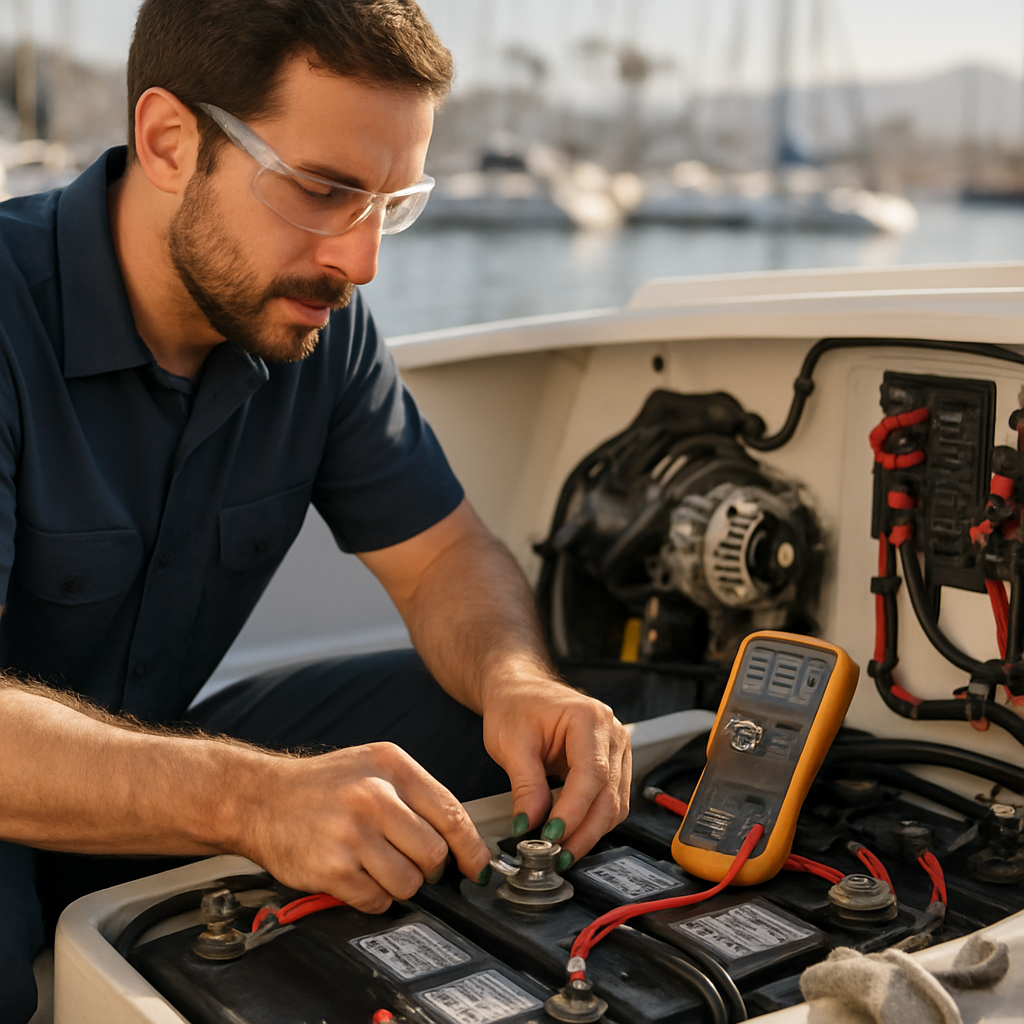
- Electrical diagnostics: Measure voltage at the pump, test the circuit breaker and fuses, and check current draw under load for realistic wear detection.
- Functional load test: Add a measured volume of water to the bilge and observe priming, flow, and automatic shutoff behavior.
- Flow and head assessment: They factor in hose length and lift height (head) to see if pump output matches rated GPH performance.
- Float switch and alarm validation: They simulate conditions that should trigger alarms and backups to ensure redundancy works.
- Report with recommendations: A clear, prioritized list — fix this now, monitor that, replace soon — so you know what to budget for.
The benefit? You get a documented inspection that you can use for maintenance planning, insurance, or peace of mind.
Step-by-Step Guide to Bilge Pump Testing and Verification for Safety
Ready to test your own bilge pump? If you’re comfortable with basic tools and safety protocols, follow this guide. If you’re not confident with electrical work or confined spaces, call a pro — safety first.
Preparation
Make sure the boat is securely moored, batteries are charged, and someone knows you’re working. Confined spaces and water don’t mix well with solo projects.
Tools and supplies to have on hand
- Multimeter (DC voltage and continuity)
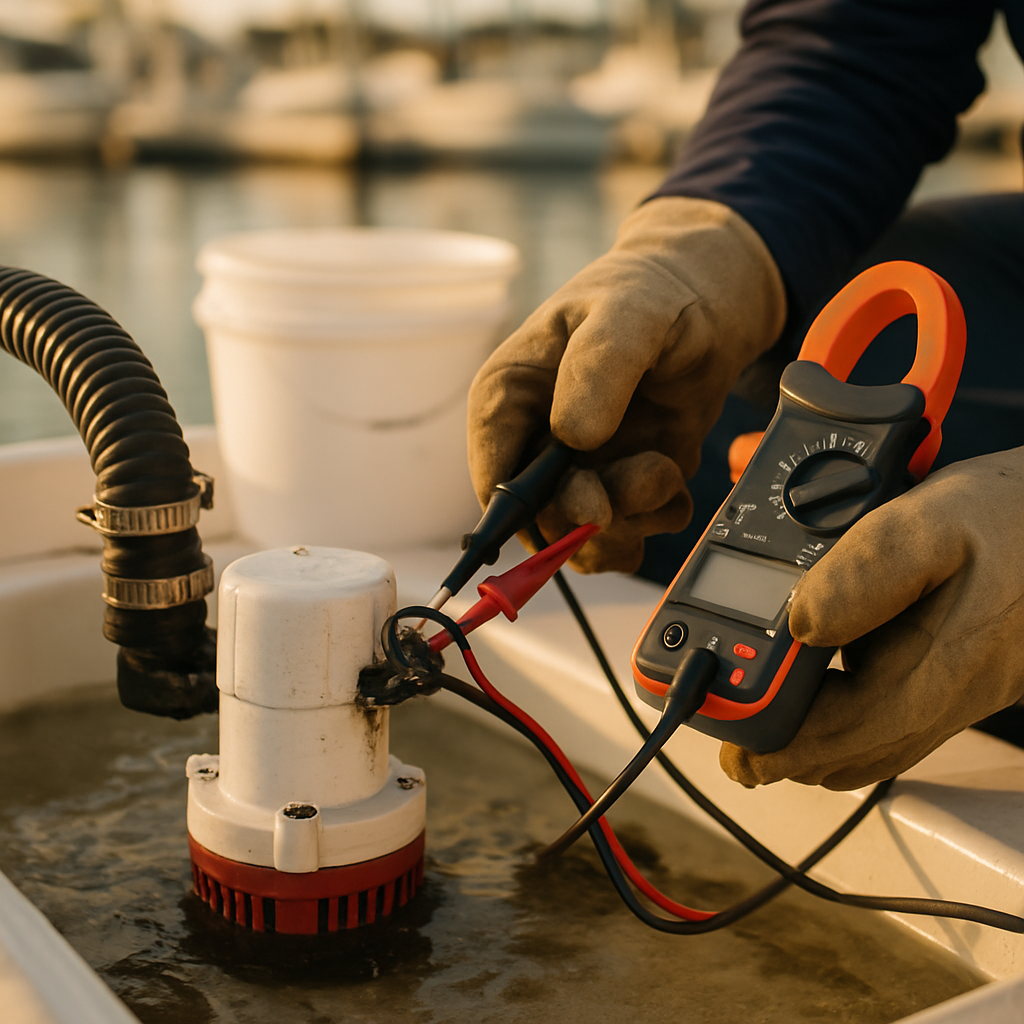
- Clamp ammeter (to measure pump current)
- Bucket or test bag to simulate bilge water
- Flashlight and inspection mirror
- Spare hoses, marine-grade clamps, inline strainer, and non-return valve
- Heat shrink, marine-grade connectors, and dielectric grease
- Notebook or digital log to record results
Step-by-step test
- Perform a visual inspection. Look for cracked housings, worn hoses, or terminal corrosion. If it looks bad, it probably is.
- Check electrical supply. With battery on and breaker engaged, use a multimeter at the pump terminals — ensure you’re seeing nominal voltage (12V or 24V as applicable).
- Manually operate the float switch. Move it through its travel and confirm it makes or breaks the circuit. Listen for relay clicks or alarm triggers.
- Fill the bilge to a level that will activate the float. Start the pump manually and watch for proper priming. Note any air-sucking noises or sputtering.
- Measure current draw. Use a clamp meter to check amperage. Compare readings to manufacturer specs. Spike or drop? That’s a red flag.
- Test automatic operation. Let the float engage by itself and ensure pump stops when water reaches the off level.
- Inspect discharge. Walk the hose run to the thru-hull/discharge point. Look for obstructions, kinks, or marine growth that could reduce flow.
- Time performance. Measure how long it takes to remove a known volume of water and calculate effective GPH. Deviations from rating may indicate wear or blockages.
- Document everything. Keep photos if needed. A dated log helps track performance over seasons and protects you for warranty or insurance claims.
Little tip: If the pump runs hot to the touch within minutes, cut power and investigate. Pumps shouldn’t get burning-hot during normal operation.
Common Issues Found During Bilge Pump Testing and How to Fix Them
Testing rarely goes by without finding at least one issue. Some are minor — annoyances you can fix on the dock. Others demand replacement. Here are the frequent offenders and how to deal with them.
Reduced flow or no flow
Cause: Clogged strainer, damaged impeller, collapsed hose, or blocked discharge. Nothing dramatic, but the symptoms are dramatic: water stays in the bilge.
Fix: Clean or replace the strainer. Inspect and replace the impeller if worn. Replace old hoses with reinforced marine hose and clear discharge points.
Pump runs but won’t prime
Cause: Air leak in suction line, loose clamps, or suction pickup positioned above the pump inlet.
Fix: Tighten hose clamps, reseal connections, or lower the pickup. Install a foot valve or a deeper pickup if necessary.
Intermittent automatic operation
Cause: Fouled or sticking float switch, corroded wiring, or mechanical interference.
Fix: Clean or replace the float switch, clean terminals, apply corrosion inhibitor, and secure the float to ensure free travel.
High current draw or overheating
Cause: Motor wear, impeller rubbing, partial blockage, or old bearings.
Fix: If the pump is old, replacement is often the best option. Otherwise, remove blockages, replace impellers, and ensure proper motor ventilation.
Backflow into the bilge
Cause: Missing or failed check valve/non-return valve on the discharge line.
Fix: Install a marine-rated check valve, ensuring correct orientation and cleanliness. Check valves can fail, so inspect them during routine maintenance.
The Importance of Regular Bilge Pump Testing for Commercial Boats in California
Commercial operators in California face stricter expectations. There’s cargo at stake, crew safety obligations, and regulatory oversight. Bilge Pump Testing is not just maintenance — it’s risk management.
Why commercial operations need stricter schedules
- High usage: Commercial pumps run more often and under heavier loads.
- Regulatory scrutiny: Documentation and periodic inspections are often required by coastal authorities and insurers.
- Safety and liability: A failed pump on a commercial trip can be catastrophic — cargo loss, environmental damage, or injury.
- Environmental factors: California’s varied coastline means vessels may encounter kelp, marine life, or debris that increase obstruction risk.
For commercial fleets, establish a documented testing routine, keep spare parts on board, and consider scheduled professional inspections from companies like Boatmechanic California.
Choosing the Right Bilge Pump Testing Kit and Tools for Your Boat
You don’t need a lab to do meaningful Bilge Pump Testing, but the right tools make the difference between guesswork and reliable results. Here’s a pragmatic breakdown of what to include depending on how deep you want to go.
Essential kit for owners
- Multimeter (voltage & continuity)
- Clamp ammeter
- Test bag or strong bucket
- Spare hose, clamps, fuses
- Small hand tools and a flashlight
Pro-level additions
- Portable flow meter for calibrated GPH checks
- Replacement impellers and pump assemblies
- Diagnostic logs and templates
- Thermal camera for hot-spot electrical checks
Quick comparison table: Basic kit vs. Professional kit
| Feature | Basic Owner Kit | Professional Tech Kit |
|---|---|---|
| Multimeter | Yes | High-accuracy with clamp ammeter |
| Flow simulation | Bucket or test bag | Portable pump and calibrated flow meter |
| Spare parts | Clamps, hose, fuse | Multiple impellers, motors, valves |
| Documentation | Owner checklist | Detailed log templates and diagnostic sheets |
Maintenance Schedule and Practical Tips
A simple schedule is easier to follow than a complicated one. Here’s a practical baseline you can adopt and modify to match your usage.
- Monthly: Visual check, float test, and a quick manual run — ideal for recreational boats.
- Quarterly: Full functional test under load, electrical checks, hose and clamp inspection.
- Annually: Full service — replace impellers if due, inspect wiring and thru-hulls, and verify check valves.
- Before long trips: Always run a complete test before you cast off on longer passages or commercial runs.
Bonus tip: Keep a small maintenance box on board with the essentials — clamps, fuses, a spare impeller if space allows. That little box can save your day.
Checklist — Quick Test You Can Do Before Leaving the Dock
- Is the bilge pump circuit breaker ON?
- Does the pump run when you manually switch it on?
- Does the float switch activate the pump?
- Are hoses kink-free and clamps tight?
- Is the discharge clear at the thru-hull or overboard point?
- Do the battery and wiring appear healthy and corrosion-free?
When to Call Boatmechanic California
Some jobs are straightforward; others need a wrench and a professional’s eye. If you notice persistent electrical faults, repeated pump failures, or a system that behaves unpredictably, call Boatmechanic California. They’ll bring marine-specific tools, parts that resist California’s salty air, and the know-how to diagnose tricky issues quickly.
For commercial operators, documented inspections and repairs by certified technicians often reduce liability and help with regulatory compliance. In short: call them before the small problem becomes a big headache.
Frequently Asked Questions (FAQ)
How often should I perform Bilge Pump Testing?
At minimum: a monthly visual and float check, and a quarterly full functional test for recreational boats. Commercial boats should follow a stricter schedule based on usage and regulatory needs.
Can I use a garden hose to test the pump?
You can for a quick check, but a bucket or test bag simulates real conditions better. Garden hoses don’t introduce debris or mimic how a real ingress behaves.
What indicates a pump needs replacement versus repair?
Replace the pump if the motor draws excessive current, runs hot quickly, or if the impeller and housing are heavily worn. Small issues like clogs or a worn impeller can sometimes be repaired, but age and repeated failures usually mean replacement is more cost-effective.
Is a backup pump necessary?
For peace of mind, yes — especially for commercial boats, overnight cruisers, and anyone who doesn’t want to gamble with a single point of failure. Two smaller pumps or one main and one backup is a common strategy.
Conclusion
Bilge Pump Testing isn’t thrilling, but it’s one of those chores that returns enormous dividends: safety, reliability, and fewer unpleasant surprises. Whether you’re a weekend boater on San Diego Bay or you run a commercial vessel out of Monterey, regular testing, proper tools, and a good maintenance rhythm keep problems small and manageable.
If you prefer a professional hand or need documented inspections for insurance or compliance, Boatmechanic California offers experienced technicians who speak your language — practical, direct, and tuned to local conditions. Don’t wait for a rainy day to discover a broken pump. Test now, fix small issues early, and get back to enjoying the water with confidence.
Want a simple starting point? Do the quick dock checklist before your next trip, and write the date in a log. That tiny habit will save you time, money, and stress — and maybe even your boat.